
1. PopCo by Scarlett Thomas
A great book by a relatively unknown British author, PopCo recounts the tale of Alice, amateur cryptographer and research/developer for a toy company, who delves into a mystery regarding a coded necklace her grandfather left her as a child. While on a R&D retreat for her company Alice meets several people who cause her to questions things about society, re-evaluating all that she thought she knew. A wonderful book twisting several plots into a braided whole. (8/10)
2. Sharp Objects by Gillian Flynn
A darkly humorous mystery novel by first time author Flynn, this read explores the possible serial killer in Camille Preaker's (a journalist from Chicago) small hometown, where she travels on an assignment from her editor. The journey nearly destroys damaged yet resistant Camille as she experiences the family she thought she had left behind. Blood is thicker than water, though and in the end it almost kills her. (7/10)
3. Next by Michael Crichton
Another one of Crichton's anti-technology thrillers, Next plays on the fears and recent media attention that genetic engineering has garnered. Set in the not to distant future, this story is filled with different plot lines along the lines of "Dave", the practically human chimp child, and a conversational parrot. Dastardly corporations who race to patent and own our very genes round out this incoherent book that manages to coincidentally (too much so, in my opinion) tie everything together just as the book wraps up in a disappointing ending. Michael's weakest work in my mind. (5/10)
4. Micronations by John Ryan
Hilarious and unbelievable. Microations is an actual travel guide published by the prolific folks at Lonely Planet (travel whatnot for everything you could ever need; and well done too). This guide takes you on a detailed journey to every self-ruled political entity in the world. Everything from people setting up fiefdoms in their own backyard to the infamous
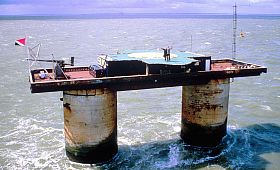 Principality Of Sealand, an independent ex-oil rig off the coast of England. The basis of these peoples country forming activities generally comes from their belief in the "Montevideo Convention On The Rights And Duties Of States" an treaty signed by 21 western hemisphere countries including the U.S.A. in the 1920's that basically says you only need a few things to be declared a state (i.e. country) such as permanent population, defined territory, a government and the ability to enter into negotiations with other states. The treaty also goes onto explain that regardless of other countries or entities recognizing your statehood you are still legal and may defend your people and your economy, set up courts and whatnot. This is a truly entertaining read, including the national anthems, history of the country, legitimacy, currency and even who the "rulers" are and how they can be reached. (9/10)
5. Powersat by Ben Bova
The "first" in the epic sequence called the Grand Tour (exploring humanities growth through the solar system) Bova introduces us to the story of how it all started. The story is about the quest of one Dan Randolph to build solar powered satellites in earth orbit and then generate energy which he could then sell back to the surface. It would supposedly provide independence from middle-eastern oil. There are many setbacks of course (oil cartels and negative government influence) and the standard beautiful love interest that almost gets away. The thing is, this book is pretty much a cowboy story, with bits of it taking place in space. Not really something to stand up and take notice about. (5/10)
6. Empire Builders by Ben Bova
The next book in the storyline of the Grand Tour, this one was written 20 years before Powersat, and it shows. Taking place on the moon and continuing the story of Dan Randolph and his efforts to increase the space program, this story just bleeds the genre stereotypes and staples. It advances Bova's vision of where he wants this series to go, but oh, so typical of every space opera out there. This kind of writing is going to make it a struggle to keep reading this series. (3/10)
7. The Book Of Lost Things by John Connolly
A remarkable fantasy book reminiscent of The Chronicles Of Narnia and the classic fairy tales of old. This is not a children's book, however. A little dark and foreboding for that. When David, a young boy in World War II England, finds a recently crashed German bomber in the back of his families estate, he investigates, only to her the voice of his dead mother calling out to him. Following her calls into a world of talking, people eating wolves and a lone night named Roland, David sets out on a journey to find the king of this realm and hopefully his mother too. While this book uses a lot of the classic fantasy elements, the story is a brave and original coming of age story, a delightful read. (8/10)
8. The Penelopiad by Margaret Atwood
The Odyssey as only Margaret Atwood could tell it. The story follows Odysseus' wife Penelope and her famous twelve hanged maids during the time the original Odyssey was following the famous adventures of it's namesake. An interesting take on Penelope's side of things. (6/10).
9. The Handmaid's Tale by Margaret Atwood
Atwood's classic tale of a dystopian future where the country is ruled by totalitarian, theocratic government.
 After an unnamed disaster renders a great percentage of the population sterile, sub-classed women are forced into the role of handmaid's for the ruling class families. They are shuffled around to different homes, their sole role being child bearers. If unable to produce offspring after 3 cycles they are declared "un-women" and shipped off to the colonies. During the day they are forced to wear completely covering clothes, reminiscent of nuns habits, with little "wings" off the side of their head to block their peripheral vision and prevent others from looking at them. Their only company are other handmaids who accompany them on brief shopping trips or who are present at birthings. They are also un-named, taking only the name of the head of the household where they are staying. Like 1984 and Fahrenheit 451 before it, The Handmaid's Tale stands out as noteworthy dystopic fiction. (9/10)
10. American Gods by Neil Gaiman
Shadow, a sort of ordinary ex-con is recruited by the old gods of mythology to fight for their survival against the new American gods of money, credit, and shopping; in this highly acclaimed fantasy novel by Gaiman. Honestly, I was expecting a lot more from what I have heard from many people. The novel seemed to run out of steam about halfway through and only managed pick up at the end, a little. (6/10)
11. The Lottery and Other Short Stories by Shirley Jackson
Jackson's marked influence on Stephen King's work encouraged me to pick this one up. The title story revolves around a, well.., lottery in a dystopic (future?) village when one resident is selected via the drawing of blank cards with one marked with a dot. That unfortunate individual is then ritualistically stoned by the other members of the village. Jackson, most famously know for her horror novel The Haunting Of Hill House, really is not a horror author in most aspects; the rest of the short stories were mostly mundane, if not slightly ominous, in nature. Many of them were very excellent leaving my rating for this book at (7/10)
12. Good Omens by Terry Pratchett & Neil Gaiman
The battle for the end of times takes a turn for the weird when Adam Young, anti-Christ and infant, is accidental switched out with another baby in the maternity ward. Warlock, the child everyone (including the Eden guardian angel, Aziraphale; and the demon Crowley, serpent who tempted Eve) thinks is the real anti-Christ, is in fact, a perfectly normal little boy. Aziraphale and Crowley, who have quite gotten used to life on earth, are now on a mission to stop the anti-Christ from fulfilling his destiny. Over all a highly entertaining and funny book (if you like the British humor, that is) from the authors of Discworld and the Sandman comics. (8/10)
13. A Gap In Nature by Tim Flannery
A beautiful rendering of art and history, this book gives an in depth study of extinct species and their habitats. From the prolific and ill-fated passenger pigeon to the Kawekaweau; a giant of New Zeeland geckos, Flannery and the artist cover 103 extinct species from 1500 to 1999 A.D. and remind us that every extinction is a wonder a beauty lost forever. (7/10)
14. The World Inside by Robert Silverberg
The first in a stack of old 60's and 70's sci-fi that I picked up in the library for a buck a piece (in hardcover no less) The World Inside is a tale set in the future where mankind has resorted to living in buildings of massive size (called "Urbmons"), 1000 floors each divided into 25 floor groups, each representing a "city". Each Urbmon contains about 800,000 people and in the results of living in such a concentrated space, the rest of the planet can be given over to farming and supplying of goods to the towers. But the pressures in living so close to one another can also send a few people "flippo", as in the case of the main character, when he tires to escape the building and discover what humanity has lost living this way. (6/10)
15. Uncle Petros And Glodbach's Conjecture by Apostolos Doxiadis
Uncle Petros..., all told through the viewpoint of his "most beloved nephew," is a story of a naturally brilliant mathematician who sets it upon himself to solve one of history's great unsolved math problems, Goldbach's Conjecture. Petros Papachristos dedicates his entire career to solving this problem. Even as the process continues and he develops new methods and formulae in effort to solve the conjecture; his life is diminishing. He feels he has only a limited amount of time to work due to the fact that all great mathematical discoveries are made by younger people. So Petros forsakes everything to his work, even forgoing publishing his new theorems, in fear that others will pick up on what he is doing and overtake his work. As a whole, the book was extremely well written. The math never overshadowed the story and the characters took center stage of it all. To watch the life progression and evolution of the two main characters and their motivations was very enjoyable. I very much look forward to reading any future books Apostolos Doxiadis might publish. (9/10)
16. Accelerando by Charles Stross
Obscure and highly technological workings of the future follow three generations of a dysfunction family through the singularity of human development. (6/10)
17. Heart-Shaped Box by Joe Hill
 Amazingly great hauntings from first time novelist Hill, ...Box is the tale of aging rocker Judas Coyne (quite obviously based on Ozzie) and his attempts to escape the past when he unwittingly buys a haunted suit for his morbid and ghostly curios collection. Destined to be a classic of the genre and one of my favorites this year. (9/10)
18. End Of An Era by Robert J. Sawyer
The story of two researchers who discover the truth about what happened to the dinosaurs first hand in this time traveling alien adventure. Great writing as usual for Sawyer in another not so memorable book. (6/10)
19. Jennifer Government by Max Barry
Jen. Gov. is a fun dystopian, satirical romp though a near future world where the governing bodies of countries are no long the rulers. The mega-national corporations have replaced the Feds, where a person's identity is solely based on who they work for. For example I would be "Timothy Barnes Noble" (at least for the moment). Yup, the folks take on the last name of the corp. they work for. (Pepsi, NRA, etc...) Children take the last name of the corp. that is sponsoring their school. (McD's, Mattel, etc...) Taxes are no more and when you call for the police you have to agree to pay the requisite service charges before they will help you. The plot revolves around one Jennifer Government, who as an agent of the declining "government" (where they have to have budget requisitions before any actions are approved) is investigating a murderous marketing tactic by Nike to increase the sales of a new line of shoe. It seems as if this book was written to be made into a movie. Full of action, explosions and other action staples, this book, while fun, will not go down in history as memorable speculative fiction. (6/10)
20. Robota by Doug Chiang
Not so fabulous story of the far pre-history of a mysterious, inhabited planet somewhere in our solar system who are given the given the gift of high technology by benevolent aliens before everything turns against them. (4/10)
21. The Prestige by Christopher Preist
Two competing early 20th century magician duel for fame and notoriety in this surprisingly decent novel. Much better than I expected and far better yet, than the movie. (7/10)
22. Flashforward by Robert J. Sawyer
The story of CERN (particle accelerator in Geneva) researchers working on the elusive Higgs-Boson particle, accidental set into events that cause everyone on earth to experience 2 minutes of their own lives 21 years in the future. Good, but not memorable fiction from Sawyer. (6/10)
23. The Facts Of Life by Graham Joyce
This slightly fantastical novel sets on Frank, the son of Cassie, the only son of seven sisters growing up in World War II England in the bombed out city of Coventry. Interesting, but not Joyce's best. (5/10)
24. Travels by Michael Crichton
The book is a non-fiction account of Michael Crichton's (Sphere, Jurassic Park, and State Of Fear to name a few) world travels. This man has had some interesting times! He recounts his adventures deep sea diving in South-East Asia, climbing Mount Kilimanjaro, and traveling to the famed Shangri-La. He even tells of his early years in med-school. These are some fascinating stories, however in the second half of the book; Crichton delves more and more into his obsession with supernatural phenomena, as typified by astral planes, psychics, and energy auras. Not only was it not traveling per se, it was mind-numbing to see how eager he was to accept these experiences as factual events. For Crichton being an Ivy League educated doctor, quite frankly, I was bored reading these latter stories. I would still recommend this book for it's other great stories, however. (5/10)
25. Confessions Of A Master Jewel Thief by Bill Mason
The true story of master-thief, the "gentleman burglar", who purportedly stole $35 million in jewels and jewelry in his career, all the time remaining a family man and business manager. (6/10)
26. The Book Thief: The True Crimes Of Daniel Spiegelman by Travis McDade
The true story of a criminal who repeatedly broke into the rare book and manuscript library at Colombia University and lifted over $18 Million dollars worth of documents, books and map plates only to be caught years later. This is the story of his trial and the un-alterable destruction he caused. Fascinating reading. (7/10)
27. No Country For Old Men by Cormac McCarthy
My first experience from McCarthy, this book is the story of three lives intertwined in aftermaths of a Mexican border drug deal gone horribly wrong. Moss, the average joe who finds the scene, Bell, the sheriff who investigates it, and the psycho Chigurh who is hired to fix thing and recover what he can. A cacophony of destruction, desperation and redemption, this book was one of my favorites this year. (9/10)
28. Neverwhere by Neil Gaiman
Probably my favorite from up-and-coming fantasy superstar Gaiman, Neverwhere is the tale of everyday working class Richard Mayhew and the adventures his life takes after rescuing a injured girl in the streets of London and being taken to the secret "underground"; the world of dark and fantastical things residing under the city. (8/10)
29. The Five People You Meet In Heaven by Mitch Albom
Decent little book from the famed Albom, The Five People You Meet In Heaven is the story of Eddie, a ride maintenance worker for a pier side carnival. When he tries to save a small girl from being crushed in a accident, Eddie dies and proceeds on a journey to meet five people, who's lives Eddie effected in some way, who guide Eddie and bring understanding to his life and death. Not my usual fare, but not disappointing either. (7/10)
30. Gravity by Tess Gerritsen
Written by Michael Chricton and Robin Cook's love child. Medical techno-phobe thriller in space. After deep sea vent biology is brought to the space station for study, things go terribly wrong. Meh. (5/10)
31. Barrel Fever by David Sedaris
Not as good as Me Talk Pretty One Day or Dress Your Family In Corduroy And Denim. This book is about 75% "stories" and the remaining 25% being the autobiographical essays he is known for. The stories read like the rest of David's essays; however they are fictional and often outrageous. Mildly entertaining, but only just. (3/10)
32. Hawksbill Station by Robert Silverberg
This was a pretty decent novel. I’ve been reading some classic sci-fi from the ‘60s and ‘70s lately that I picked up a library used books sale. A tale of political dissidents being sentenced by a revolutionary government to live the rest of their life 1.00005 billion years ago via an innovation in one-way time-travel technology. Their story of dealing with life in an epoch before land creatures evolved, the ground is bare rock, even vegetation has not come around yet. The only living organisms are found in the sea. An interesting story, although, as usual for Silverberg, it is a thinly veiled social commentary on life in 1960’s and its political climate. (6/10)
33. Phoenix by Richard Cowper
This one was not too bad either. Another of the old sci-fi books that I picked from the library sale; Phoenix is a tale of a young man named Bard who opts to take anabiosis (suspended animation - freezing) for three years and wakes only to find that 1500 years have passed and the technological marvel that was his world is long gone. The rest of the story follows his adventure in trying to find his place in this re-started world of "feudal" civilization. (6/10)
34. Naked by David Sedaris
This was much more like what I expect from Mr. Sedaris. Far better than Barrel Fever and almost as good as Me Talk Pretty. Lots of funny and amusing stories from his life and travels. It's hard to believe one guy has so many unusual stories to tell. Maybe we all do, and he just knows how to bring them to life. (7/10)
35. Blaze by Richard Bachman
This was a pretty great story written during King's "Bachman phase" in the '70s. Revised with small updates to make it a little more modern for this first publication, this "lost" novel is the story of Clayton Blaisdell, Jr., an almost loveable, mentally challenged criminal who abducts a six-month old baby in a ransom attempt gone awry after his partner-in-crime (and the "brains" behind the operation) is killed. (9/10)
36. Starplex by Robert J. Sawyer
Another Sci-Fi (I've been on kind of a genre-jag lately) from one of my favorite SF authors actively writing today. While this is not a good as Sawyer's other work, this is still a pretty great story. A little "star trek-y" at the beginning, Starplex is the tale of a large ship jointly built and manned by three different inter-stellar races, which have lately come into contact with each other via the discovery of "shortcuts" similar to wormholes that has allowed instantaneous travel to various points in the galaxy. The story gains momentum with the discovery of dark matter and its apparent sentience, while green 4th generation stars (our universe is only on second gen. stars) from the future come spewing out shortcuts all over the system. A fun, interesting tale of the future of humanity. (7/10)
37. Illegal Alien by Robert J. Sawyer
Hey, big surprise, another SF book on my list for '07. To start, Illegal Alien has a ridiculous premise. During the initial weeks of first contact with an extra-terrestrial species, a human scientist and member of the primary contact team is murdered. And a "Tosok" as the aliens call themselves is charged and put on trial. While this sounds absurd and a little stupid, Sawyer does a great job of making this story believable and keeping the plot moving. Plot twists abound and while they are not too surprising, Illegal Alien is a fun read. (8/10)
38. Company by Max Barry
Another irreverent and satirical book by the author of Jennifer Government. This time around Barry is lampooning the inner workings of big business/management (He even dedicates the book to Hewlett-Packard; his former employer). Jones, a recent hire at Zephyr Holdings, starts his new job in a haze of incomprehension. Not only does not a single employee know what the company actually produces; but a doughnut went missing from the daily delivery from catering (before they get outsourced, that is, along with IT and the re-structuring of every other department) and there is hell to pay...A pretty decent novel, lighthearted enough to make you laugh, but serious enough to make one wonder if this really happens out there. (7/10)
39. Fermin by Sam Savage
An odd and original book by first time author Savage, Firmin is the tale of an intellectual rat for whom this book is named.
 Born in the basement of a Boston book store and left to fight for food amongst his larger brothers and sisters, Firmin soon realizes the joy of eating books. Each book has its own flavor and personality. Not long after Firmin discovers that the ingestion of these tomes has actually allowed him to learn to read them as well. Soon he is reading more and eating less, just nibbling on the margins. He quickly becomes aware of his past gluttony as the stories he tries to read are left incomplete from his devourings. The tale continues to follow his attempted friendship with the proprietor and his adventures in the surrounding neighborhood; overall a pretty fun and inventive novel. (8/10)
40. Doomsday Book by Connie Willis
An interesting Hugo & Nebula award winner from '92, Doomsday Book recounts the tale of a historian named Kirvin who travels from 2035 to 1348 in a misguided attempt to study pre-plague England via a newer time-travel technology run by the universities. Unfortunately the calculations are wrong and when she aims for 1322 she ends in smack in the middle of the Bubonic Plague. And the "net" is closed due to a catastrophe in her present time. An exciting book, flipping back and forth between her adventures and the present day folks trying (or not) to get her back. My only complaint is there are a few plot points that go unresolved at the end. The plot also makes you wonder if Crichton read this book before publishing Timeline... (7/10)
41. I, Robot by Isaac Asimov
All right, if you have seen the movie, forget everything about it, because the book is nothing like it. And I don't mean that in the sense of most book to movie translations, I really mean: It is nothing like the movie. If I'm not mistaken the credits of the movie only say "suggested by the works of Isaac Asimov." Pretty much the only things similar are the Three Laws and name of the characters. The book is actually a series of short stories intertwined in a backstory featuring Dr. Susan Calvin and her memories of her career with U.S. Robots & Mechanical Men. Each of the stories features a new line of robot from USRMM and its inevitable conflict with one of the Three Laws which are as follows: 1. A robot may not injure a human being or, through inaction, allow a human being to come to harm. 2. A robot must obey orders given to it by human beings except where such orders would conflict with the First Law. 3. A robot must protect its own existence as long as such protection does not conflict with the First or Second Law. Each conflict in each short story represents a new learning curve for USRMM and its designers/leadership team. I, Robot overall, is a pretty quick and interesting read. I enjoyed the individual stories thoroughly and the book is a great primer to Asimov's worlds. (9/10)
42. The Fermata by Nicholson Baker
I thought I was getting into some sort of sci-fi-ish book about a guy who could stop time at will, after hearing about this book on a thread regarding this sort of thing, but I must not have read real close, because what I got was porn. And pretty hardcore at that. Baker's book revolves around, like I sad, a guy who can stop time at will (most of the time) leaving him the only moving thing in a universe on standstill. What does he do you might ask? Does he rob banks? Save people in perilous situations? Nope, he undresses women and fondles them. Sometimes he uses the opportunity to find out more about them (go though their purses, apartments, etc...) and uses that information to seduce them in normal time; other times he just gets them naked and plays with their under-parts and himself simultaneously. Interesting concept (the time stopping thing), don't get me wrong. And Baker can write. The guy's not a hack, but he took this book in places I was not really expecting. Lot's of potential, not much follow through. (4/10)
43. Syrup by Max(x) Barry
The more I read this guy, the more I like him. He's never going to be accused of being literary, but Barry's books are just fun as heck to read. And Syrup was not any different. In fact it may be my favorite of his three books, followed by Jennifer Government and Company. The story is of one Michael Holloway, a marketer, who goes by the name of "Scat" selling his new genius plan, freelance, to Coca-Cola. It goes down-hill from there. Scat joins up with "6" to take on Sneaky Pete, "@," and the rest of the Coke empire, making this is one joyride of a book. An absolutely hilarious, lampoon of corporate marketing and the dark side of America's favorite soft drink. (9/10)
44. Schild's Ladder by Greg Egan
Wow. This was a fascinating book. My first read by Greg Egan, Schild's Ladder is the tale of an experimenter who inadvertently creates a bubble of a new type of vacuum that is more stable than our own universal vacuum. Unfortunately this bubble is also expanding and 1/2 the speed of light and seemingly destroying everything in its path. When researchers, who are trying to understand the cause of this, discover a new "life" inside this growing world they are forced into a decision to save their (our) universe or the new "novo-vacuum" life. This book is probably the hardest of hard science fiction that I have read in a long time. Egan fills his book with a cacophony of physics and wonder. (10/10)
45. The Lincoln Lawyer by Michael Connelly
The story follows one Mickey Haller, a defense lawyer (and notably also half-brother to Connelly's mainstay character, Detective Harry Bosch) whose father (also a lawyer) once told him "The scariest client is an innocent client." Haller is finding this out to be true as he defends his latest "franchise" client Louis Roulet from attempted rape and murder of a prostitute. True to Connelly's style he keeps you guessing till the very end and The Lincoln Lawyer is no letdown, plots full of suspense and twists. I like the Bosch books better, but it seems Connelly has found another franchise himself with that of Mickey Haller. Expect to hear from him again. (8/10)
46. The Gold Coast by Kim Stanley Robinson
See in-depth review in previous blog posting. (7/10)
47. The Sunset Limited by Cormac McCarthy
This brief novel (written in a stage play format) is deeply moving. This tale finds the two protagonists (indeed the only two characters at all, in this story) "Black" and "White", in Black's small apartment; apparently right after White's attempted suicide in front of a train. Black had been the individual who pulled White back at the last second and subsequently brought him back to his apartment to talk about it. The two are separated by more than names. White is a professor, making a comfortable living though left in despair, while Black is an ex-con, ex-addict who is desperately trying to convince White of the power of Faith. These two opposing world views are the true conflict of this story and leave the reader quickly wishing for more than the ending provides. An excellent story, none the less, McCarthy spins this classic battle with his trademark style and stance. (8/10)
48. The Road by Cormac McCarthy
Wow, I'm not even sure where to begin for this one. This is possibly one of the most bleak yet amazing books I have ever had the pleasure to read. The story takes place in an unnamed post-apocalyptic future where pretty much 99.9% of the people in the world are dead, the world burned by a fire leaving drifting ash everywhere, and two people called only The Man
 (sometimes Father or Papa) and The Boy (or son, occasionally). This is their tale of struggle to survive while moving south on foot to try and reach warmer climates for the winter. While we are treated to some tantalizing back story in occasional flashbacks, not much is know about what happened. Most people are dead and a lot of the country is destroyed or scavenged clean in the aftermath of whatever happened. There is so much terror for these two; their next meal is almost always a mystery and they come close to starvation on several occasions. Roving bands of highwaymen are a constant threat, and the Boy's own inner demons haunt their journey as well. But at the same time, there is so much perceived hope and love too. It is clear that the Man will sacrifice anything (even his own humanity) to protect his son. A dismal future in McCarthy's typical style and prose, The Road is probably the most moving book I've read all year. (10/10)
49. Rollback by Robert J. Sawyer
Another near future sci-fi suspense from Canadian author Sawyer. In the same sound and style of some of his previous works, Rollback is the story of an old married couple; Don and his wife Sarah, who back in the early twenty first century, discovered an intelligent alien signal from a star system about 38 light years away. Sarah decodes the message and her team sends a reply. Low and behold, 38 years later, they get a response. An interstellar conversation is going. The only problem is Sarah is now 87 years old and will not live to hear another reply. A billionaire industrialist offers to pay for Sarah to have the newly developed "rollback" procedure, rejuvenation of her very DNA and other methods to effectively allow her to be 25 again and continue her work decoding the alien message. She only agrees on the basis that her husband Don, of 60 years, gets the treatment too. In a cruel twist of fate, the treatment works for Don and not for Sarah. Suddenly there is a 60 year difference in age between the two and the story continues to detail Don's feelings of guilt, lack of purpose and Sarah's impending death, the alien message still un-decoded. Rollback is a descent read, don't get me wrong, but it seems that while all of Sawyer's works have different plots and devices, I'm beginning to blur the stories in my mind. They all feel very similar. There are only a couple of his works that really stick out in my mind as being independent stories. Rollback is a fun tale, but unfortunately, entirely too forgettable. (6/10)
50. Alas, Babylon by Pat Frank
The classic post-apocalyptic novel. To Fort Repose, a tiny town in the middle of Florida during the cold war with the U.S.S.R., Captain Mark Briggs, stationed at in a command post in the mountains of Colorado, arranges for his family to stay in the small town with his brother Randy after some seemingly innocuous news leads him to believe the two world super-powers will soon be at war. The rest of the story follows Randy and the others in town as they try to survive the nuclear holocaust that has ravaged every major city and military base in the country, yet left Fort Repose, surprisingly shielded. While some of Frank's situations and characters are dated (the story was written in '59) it is a great, if not a little brief, tale. It could use some expansions here and there, but the characters hold their own in this story of terrible hope and trails. A dystopic-utopia. (7/10)
51. Ender's Game by Orson Scott Card
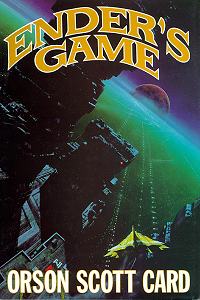 Probably the best known science fiction, (or at least most read) this classic work by Card is one of my favorites of all time. Set in a future where mankind has just barley survived two intergalactic wars with an alien race, not so affectionately nicknamed the buggers. In anticipation, the world's combined military leadership has set up the Battle School for training of new leadership in the pre-emptive 3rd war. It is in this school we find Andrew (Ender) Wiggin, a "third" sibling in a family when world population laws only allow two children each. In this school, Ender is trained, tested and pushed to the breaking point, his commanders believing he is mankind's last, greatest hope. Required at the Marine Corp University in Quantico as a textbook on the psychology of leadership and taught at many schools and colleges worldwide, this book is probably the most influential sci-fi ever written. (10/10)
52. The Westing Game by Ellen Raskin
Read on recommendation from a fellow co-worker at the bookstore, this 1979 Newberry Award winning children/Young Adult murder mystery book is pretty interesting. When paper products magnate Sam Westing dies unexpectedly, twelve neighbors and strangers are called together in a promise of inheriting his fortune while at the same time forced to find the supposed murderer of Mr Westing among their numbers, in order to claim the prize. Strange ties evolve while backstabbing and betrayal abound in this clever and gripping tale. (7/10)
53. The World Without Us by Alan Weisman
A full fledged novel published in 2007 based on a thought experiment originally published in an article in the science magazine Discover, Weisman leads us on a profound journey of just how quickly the world would recover and leave itself free from our mighty cities and public works. While the river might claim the famed New York subway within hours and the city within years what of mankind's achievement will last into the far future? The World Without... is a thought provoking look at our impact on our only home and the tenuous grasp we might really have. (8/10)
54. I'm A Stanger Here Myself by Bill Bryson
In this compilation of his essays from the magazine Mail On Sunday, Bryson recounts his experiences of living in the United States again, after being abroad in the United Kingdom for over twenty years. Brilliant, funny and insightful. (8/10)
Anyway, with 54 books and exactly 7.000 out of 10 for this years average read, I'm well satisfied. Not too bad I think, I've had worse years! And I'm very much looking forward to 2008.
"I've never known any trouble that a hour's reading didn't assuage." - Charles de Secondat (1689-1755)


 All of them sitting down with the laptop in my, well... lap and giving me suggestions like "Now! You've just noticed the most sought after book on your wishlist has just become available!" and "Reach for that Orwell like you are cataloging it to be given away" (as if I'd ever give George's complete works out!). It was quite strange to say the least. He kept talking and taking pictures until he thought I finally was relaxed and natural enough to get some good shots. After telling us about how Chicago is nothing more than Grand Rapids writ large and to get real culture you have to go to London or Tokyo he started packing up his bags and took off. Before he left he assured me the photos would appear on the Times website at the very least and probably in the paper too. I had my doubts.
 Okay, they can't all be about science, my cats and kittens. Today I'm going to tell you why BookMooch is pretty much the best things to happen to books since Gutenberg (and LibraryThing). I'll get back to the science next time (thinking about a discourse on Saturn's moon Titan, maybe? Or the Voyager deep space article I was working on?)
 Books 1 & 2 of 4 book epic techno/fantasy called Otherland) - The Eyes of the Dragon, Different Seasons and Storm Of The Century, three by
 A few of them, even more. The coolest part about this whole business is that almost all of these books are hardcover first eds. Those 8 Asimov books I mooched? Special collector editions, absolutely beautiful! And they go for $30-60 a piece on Amazon.
 Monday marked the one year anniversary of our tiny friends demotion from planet-hood.
 Voyager 1 had a shot at a Pluto flyby but the mission controllers opted at that time to have it explore the

